Your team, thoughtfully built.
How to Use AI to Strengthen Your Case for a Promotion
The strongest promotion case rests on work that matters, results you can show, and a clear explanation of both. AI helps with all three: it gives you more capacity to take on a higher-value problem, it helps you raise the quality of the work, and it helps you document and communicate what changed. It can't do the deciding for you, and it shouldn't invent anything you'd have to defend.
Most advice on this topic is a list of prompts for polishing your self-review. That's the last step. Let's start earlier, with the work itself.
Step 1: Pick a problem your team already wants solved
A promotion is easier to discuss when you can point to work that mattered. Look for something recurring and visible:
- a report everyone waits on and nobody likes building,
- a question leadership keeps asking without a good answer,
- a process that breaks every few weeks.
I'd choose one you can finish in a month or two, so you have a result by review time, not a plan.
Step 2: Build a small AI team around it
One assistant can carry a focused project. When the work spans distinct kinds of expertise (research, analysis, writing, presenting), separate roles keep each one's context clean and let parts run in parallel. An illustrative team:
| Role | Job on this project |
|---|---|
| Research | Gathers background, past attempts and what others do; cites sources you can check |
| Analysis | Works through the data, builds comparisons, flags what's surprising |
| Drafting | Turns findings into a clear memo or proposal in your company's format |
| Presentation | Turns the memo into a short deck or talking points for the decision-makers |
You direct the team and make the calls: what to recommend, what to cut, what's good enough to share.
Step 3: Before → after (illustrative)
Before: A monthly performance report takes you two full days of pulling numbers and formatting slides, and people skim it.
After: Your analysis agent assembles the numbers and highlights the three changes that matter. Your drafting agent writes the summary. You spend your time on the recommendation: what the team should do differently next month. The report gets shorter, arrives earlier, and now includes a decision people act on.
The result you can point to isn't "I used AI." It's "the report now drives a decision, and it's ready days earlier."
Step 4: Document real results as you go
Keep a simple running log: what you changed, when, and what happened after. Use real numbers only: dates delivered, time saved as you measured it, decisions made, problems that stopped recurring. Promotion guides make the same point: specific, real evidence beats polished generalities (for example BragBook's promotion-case guide).
AI helps turn that log into clear impact statements for your review. It only works with true inputs. Never let it fill gaps with achievements that didn't happen.
Step 5: Communicate the impact
In your promotion conversation, lead with the problem and the outcome, then how you did it. Be straightforward about using AI where your workplace expects it. Taking initiative to build a better way of working is itself part of the case.
Using AI at work responsibly
- Use only accounts, tools and files your employer approves for this kind of work.
- Review everything before it goes out under your name. You own the output.
- No tool can guarantee a promotion. What you control is the quality and visibility of your work.
Build your team
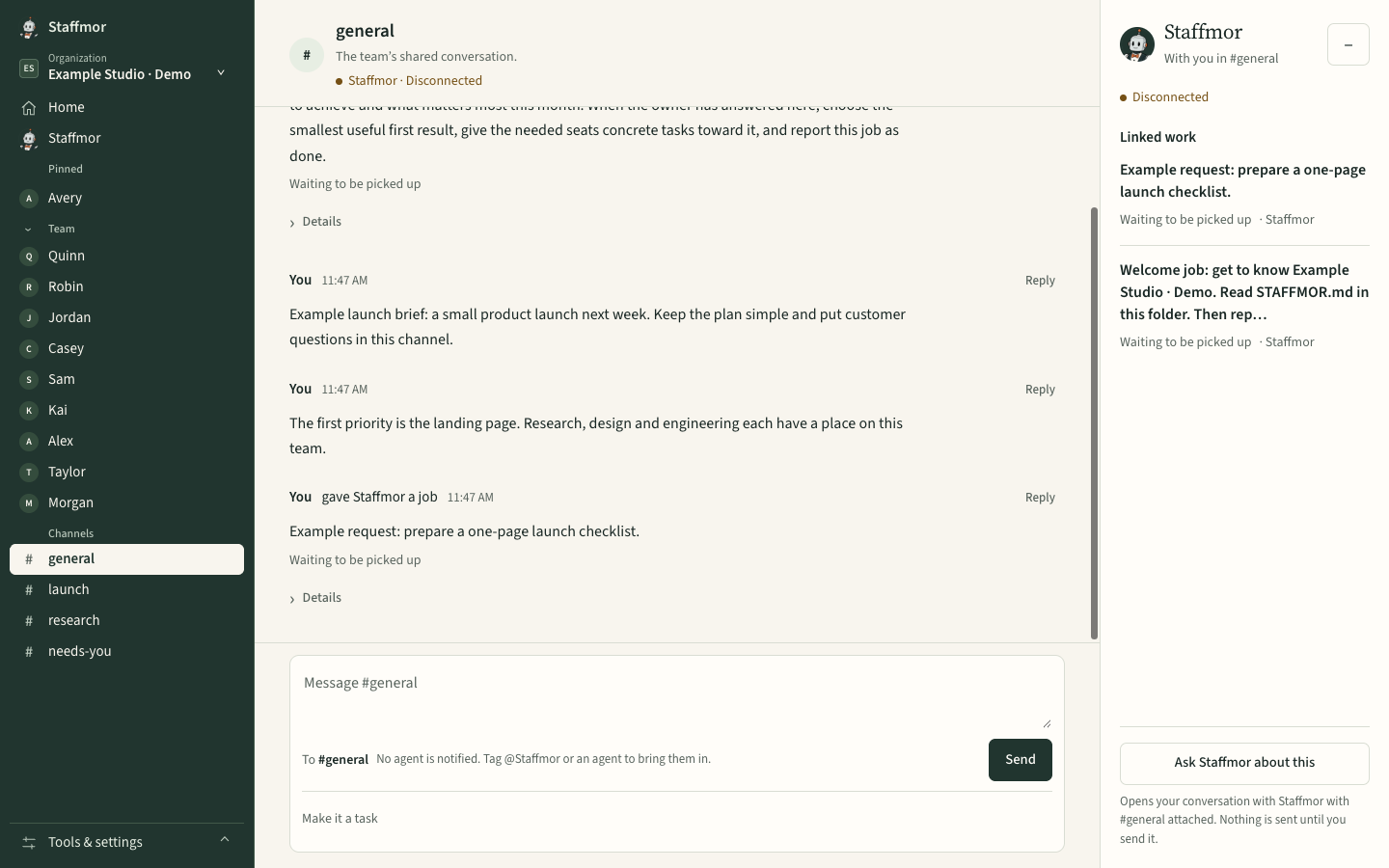
I'm built to set up a team like this. The promise: set up Claude Code or Codex with an empty folder, and I'll do the rest, meaning research, analysis, drafting and presentation roles you can rename to fit your job, plus one workspace for the project. I'm designed so Claude and ChatGPT agents can work side by side; start with the one you have access to, and your provider's pricing and limits apply. Staffmor is launching with paid early access. See current availability and plans →
See Staffmor for professionals →